
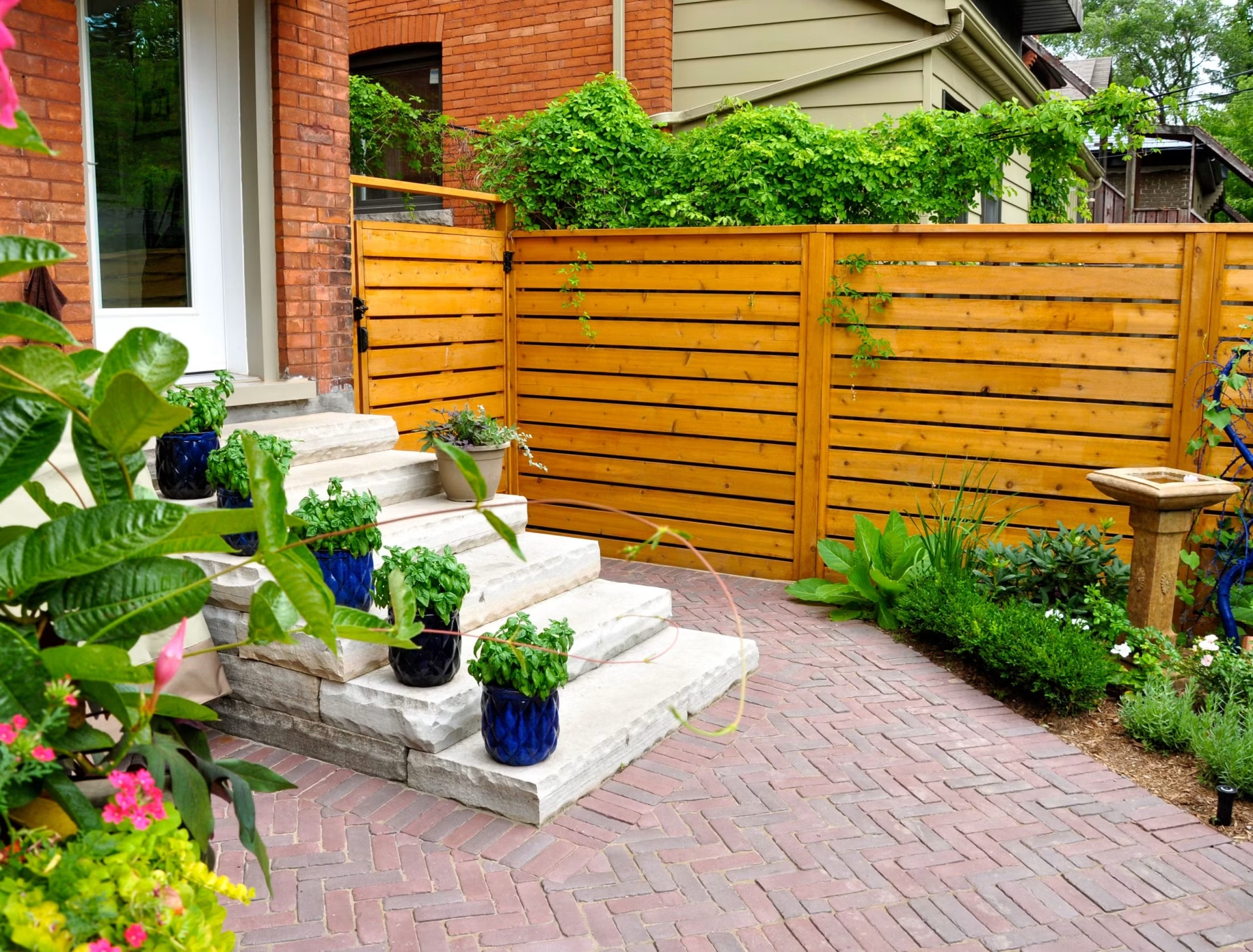
When buyers walk through a property, they take in more than they realise. Inside, they notice light, layout, and condition. Outside, they notice structure. The first thing that frames a garden is the boundary. A straight, solid fence makes the space feel secure and settled. A leaning or patchy one does the opposite. That is why more homeowners are searching for fencing companies near me before putting their homes on the market. Many begin by exploring professional fencing services in York to understand what can realistically be improved before viewings begin.
After decades working as a fencing contractor across York, I can say this is not guesswork. Buyers read boundaries instinctively. They may not comment on them out loud, but their first impression is shaped in seconds.
Why the fence frames the entire garden
A garden is defined by its edges. Fencing creates the lines that shape the space. If those lines are straight and consistent, the garden feels larger and more organised.
If the top line dips or panels vary in height, the space feels unsettled.
One thing I see often on local jobs is homeowners investing in patios and planting while ignoring the boundary. Once everything else is refreshed, the fence stands out even more.
During viewings, buyers scan the space quickly. The boundary is part of that scan.
Alignment speaks louder than decoration
Buyers rarely comment on panel style. They notice alignment.
A fence that runs level and true suggests proper installation. It signals that the property has been maintained with care.
A fence that leans or bows suggests movement below ground. It raises quiet questions about drainage, soil, and age.
These impressions form before a buyer has time to think rationally about them.
Clay soil movement in York and its visual impact
York’s clay soil moves with the seasons. It swells when wet and shrinks in dry weather.
I usually install posts at around 600mm to 750mm depth to reach more stable ground. Older fences are often much shallower.
Over time, shallow posts begin to shift. The fence line becomes uneven. Gaps appear between panels.
Buyers may not understand the soil mechanics, but they see the result.
Why privacy shapes first impressions
Privacy is high on buyers’ lists. Remote work and outdoor living have made gardens part of daily life, not just occasional use.
If a fence allows clear sight lines from neighbouring windows, buyers feel exposed. Even if the house is perfect inside, the garden feels compromised.
Solid, well installed fencing creates a sense of enclosure that supports the overall impression of the property.
The subtle signs contractors check first
When I assess a fence before a sale, I do not just look at the panels.
I check:
- Post movement at ground level
- Alignment along the full run
- Rail condition behind panels
- Fixings that may be under strain
- Drainage patterns at the base
Homeowners often focus on replacing a single panel. Contractors look at the whole system.
When repeated repairs become obvious
A fence that has been repaired multiple times tells a story. Mismatched timber. Extra brackets. Concrete posts next to timber ones.
These details stand out during viewings. They suggest the fence has reached the end of its natural lifespan.
Homeowners searching for fence repair near me often discover that patching visible issues does not always improve overall appearance.
Targeted repairs can work, but only if the structure remains sound.
Why height consistency matters more than style
Height inconsistency draws the eye. Even a few centimetres difference between sections can make the fence look unstable.
Buyers may not measure it, but they feel it.
A consistent height and clean top line create confidence. That confidence extends to how the whole property is perceived.
The drainage detail that affects resale value
Poor drainage along the fence line leaves clues. Moss growth. Dark staining at the base of panels. Soft soil around posts.
These signs indicate moisture retention and potential rot.
When buyers see damp timber, they assume future cost. Addressing drainage during installation improves both performance and appearance.
Why composite fencing appeals to sellers
Composite fencing is increasingly chosen before listing a property.
Composite fencing cost is higher initially, but it offers consistent colour and minimal maintenance. It does not warp like low grade timber.
For sellers, this consistency removes one area of concern. Buyers see a boundary that looks finished rather than one that will soon need work.
The psychology of straight boundaries
Humans respond to order. Straight lines create a sense of calm and structure.
A level fence makes a garden feel contained and complete. A leaning fence suggests instability.
From years on site, I have seen how this simple detail influences how comfortable buyers feel in a space.
When replacing before selling makes sense
Not every property needs full fence replacement before sale.
If posts are stable and issues are localised, focused improvements may be enough. Reviewing practical guidance on fence repairs and restoration can help homeowners decide whether repairs will restore confidence.
If multiple posts have moved or timber is soft at ground level, replacement may be the better long term choice.
Exposure and wind considerations
Exposed gardens require stronger boundaries. Solid panels in windy locations can suffer over time.
Buyers may test fences gently without realising it. A panel that rattles under light pressure reduces confidence.
Design choices that account for wind load improve both durability and buyer perception.
The impact of new build fencing
New build estates often use basic panel systems set into made up ground. These can begin to move within a few seasons.
When such properties return to the market, buyers are already aware of common boundary issues.
Upgrading fencing before listing removes that known weakness.
The role of fencing in overall property condition
Fencing may not be the most expensive element of a property, but it frames the garden experience.
During viewings, buyers step outside and quickly form an opinion. A solid boundary reassures them. A failing one raises doubts.
Homeowners exploring options around garden fencing installations in York often do so because they recognise how much influence the boundary has on first impressions.
Why small improvements can change perception
Sometimes a simple correction makes a big difference. Resetting a leaning post. Replacing a damaged section. Improving alignment.
Other times, a full replacement transforms the space entirely.
The key is honest assessment rather than cosmetic fixes.
What buyers really see
Buyers see more than panels and posts. They see potential cost. They see future disruption. They see how well a home has been maintained.
From decades working across York, it is clear that the garden feature buyers notice within seconds is not the patio or the planting. It is the boundary.
A straight, well installed fence supports confidence. It frames the garden properly and quietly strengthens the overall value of the home.
