
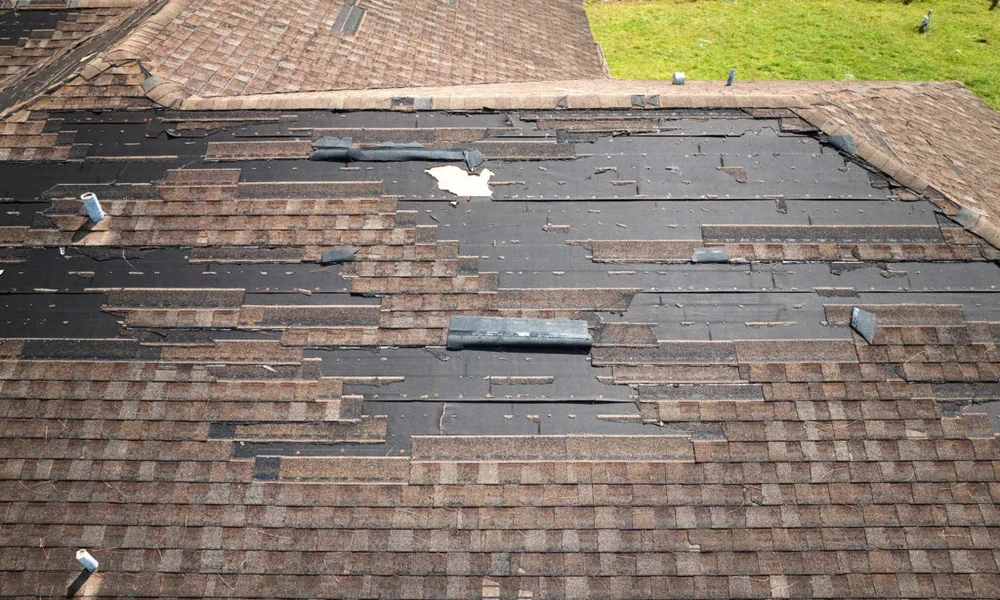
Wind damage is one of the most misjudged forms of roof damage. Hail leaves dents and a fallen tree leaves no doubt, but wind often works in ways that are invisible from the driveway. A roof can lose its grip on dozens of shingles without a single one landing in the yard, and the consequences may not show up until a later storm or a hard freeze.
Understanding what happens in sequence, from the first gust to the final repair, explains why damage sometimes appears weeks after the weather has cleared. It also shows where homeowners can make choices that limit the harm, and which decisions are better left to someone who can get on the roof safely.
Homeowners sorting through West Springfield Wind Damage after a storm can turn to Budget Roofing for stabilization and a clear diagnosis. The crew installs shingle and metal systems using materials from manufacturers such as GAF, CertainTeed, Owens Corning and Malarkey, and the company is known locally for honest recommendations and no pressure consultations, which matters when deciding between a repair and a full replacement. Emergency calls cover missing shingles, storm damage and water intrusion. Filling out the online request form with a short description of what you are seeing, and a few photos if you have them, gets the process moving quickly.
The First Gusts Hit the Edges
Wind does not press evenly across a roof. As air flows over the house, it creates suction that pulls upward on the surface, and that uplift is strongest at the corners, the eaves, the rakes and the ridge. These perimeter zones are where damage almost always starts.
Shingles are tested against this force and labeled accordingly. Common ratings under ASTM testing standards cover wind speeds from roughly 90 mph up to 150 mph for high wind products. Those ratings assume proper installation, including correct nail count and placement, which is why two roofs with identical shingles can perform very differently in the same storm.
The Seal Strip Lets Go
Each asphalt shingle is held down partly by nails and partly by an adhesive strip that bonds it to the shingle below. When gusts break that bond, the shingle starts to flap. This is often the first real damage, and it cannot be seen from the ground.
Repeated lifting creates a horizontal crease across the shingle, usually near the nail line. A creased shingle has lost much of its strength and may later tear free entirely. Roofs installed late in the fall are especially vulnerable, since the adhesive strips need warm sunshine to activate and may not bond fully until spring.
Pieces Start Coming Loose
With enough force, weakened shingles tear away. Ridge caps and starter courses along the edges are frequent early losses. Metal flashing around chimneys and walls can bend or lift, and drip edge can peel back from the eaves.
At the same time, wind turns loose objects into projectiles. Branches, patio furniture and debris from neighboring properties scuff granules, crack shingles and dent gutters. Larger limbs and fallen trees can puncture the roof deck, which moves the situation straight into emergency territory.
Rain Finds the Openings
Most windstorms bring rain, and it rarely falls straight down. Wind driven rain is pushed sideways and even upward, forcing water under lifted shingles, through bent flashing and past exposed underlayment. Underlayment can hold off water briefly, but it is not designed to be a roof’s only protection for long.
Inside the attic, water soaks into insulation, which loses much of its insulating value once wet. It spreads along rafters and the deck before showing up as ceiling stains, sometimes far from the actual opening.
The First Hours After the Storm
This is when homeowners have the most influence over the final outcome. Stay off the roof, since wet, damaged shingles are slick and wind weakened sections can give way. Walk the property from the ground, look for shingles or flashing in the yard, and check the attic with a flashlight for drips or wet insulation.
Photograph everything with dates visible, including debris and interior stains. Most insurance policies expect reasonable steps to prevent further damage, so emergency tarping of any open areas is worth arranging quickly. Move valuables away from active leaks and catch dripping water to protect floors.
The Following Days and Weeks
The delayed stage is where wind damage earns its reputation. Mold can begin growing on damp wood and drywall within a day or two if moisture stays trapped. Soaked roof decking may swell, delaminate or soften. Creased shingles that survived the first storm often fail in the next moderate one, leaving homeowners unsure which event caused the loss.
Seasonal timing adds pressure. Damage left unrepaired into winter gives meltwater and ice more ways into the structure, turning a modest repair into a larger one.
The Inspection
A thorough post storm inspection looks well beyond missing shingles. Inspectors lift tabs to test seal strips, look for crease lines, and check for granule scuffing that points to impact. Flashing, pipe boots, ridge caps and gutters get a close look, and the attic is checked for daylight, water tracks and damp sheathing.
The findings should be documented with photos and notes that separate storm damage from normal wear. That distinction matters for insurance claims and for deciding what kind of repair makes sense.
Repair or Replace
Isolated damage on a younger roof usually calls for a targeted repair. The calculation changes when shingles are older and brittle, since lifting them to install replacements can crack the surrounding ones. Color matching is another hurdle, because weathered shingles rarely match new stock and product lines get discontinued.
Many homeowners replacing a wind damaged roof are now asking for upgrades that resist the next storm better. Research from the Insurance Institute for Business & Home Safety has shaped approaches such as sealed roof decks, ring shank nails, extra nails per shingle and reinforced edges. Metal roofing is gaining ground as well, since properly installed standing seam systems carry high wind ratings and have no seal strips to break.
Closing the Loop
The storm itself may last an hour, but its effect on a roof plays out over weeks. Catching the damage during the first stages, when shingles have only lifted or creased, keeps the fix small. Waiting until water appears indoors usually means repairing the roof, the deck and the rooms beneath it.
